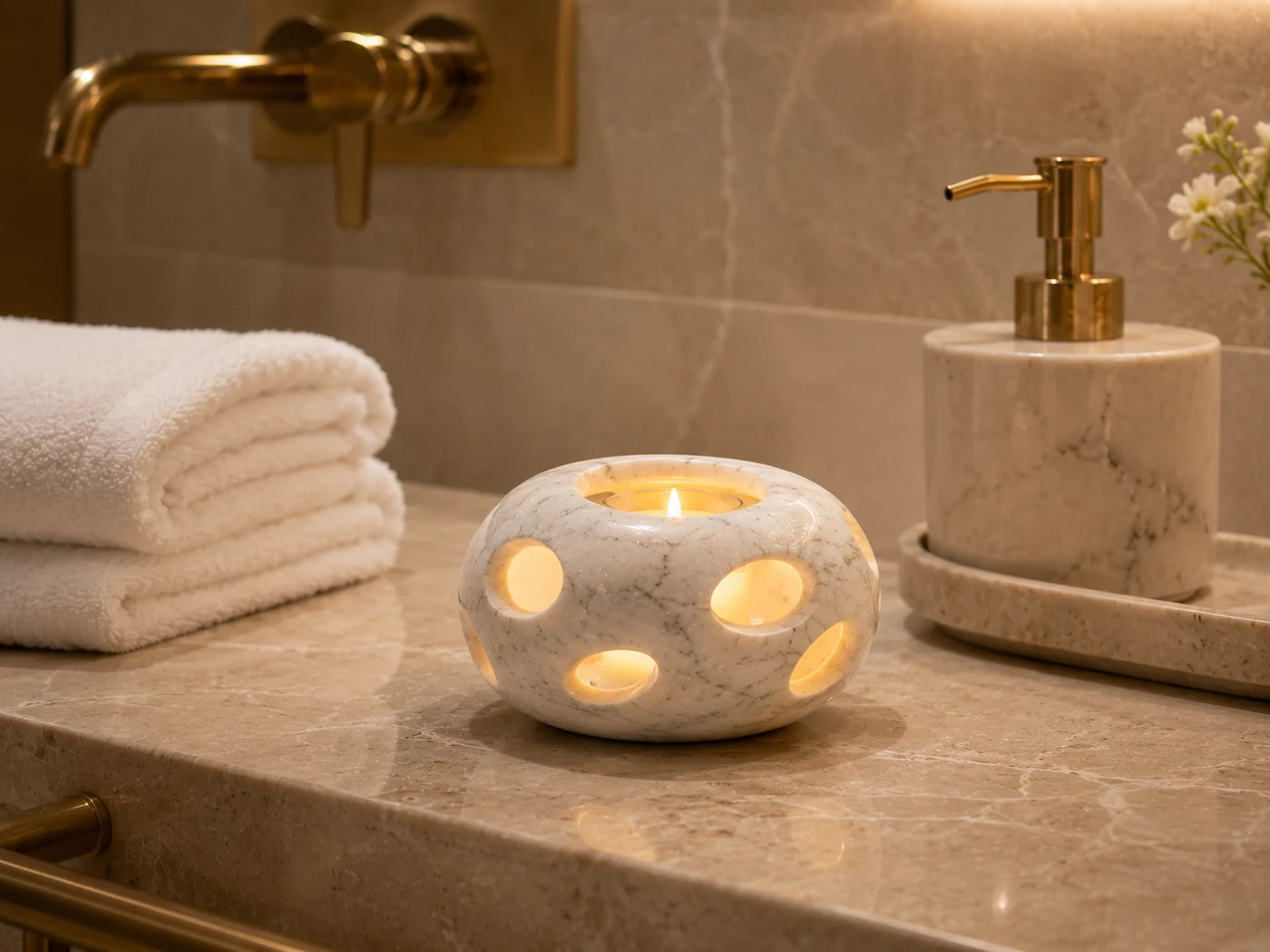
A small object can change how a surface feels
In hospitality spaces, the smallest objects often shape the way a guest reads the room. A tray near the vanity, a candle vessel beside a bath, or a quiet stone object on a spa counter can make a surface feel intentional rather than simply furnished.
Natural stone carries weight, tactility and visual calm. It does not need to dominate a room to be noticed. When used with proportion and restraint, it can help connect functional hospitality details with a more refined sense of atmosphere.
Beyond decoration: surface order and guest rhythm
A hotel room or suite is full of small transitions: placing a watch beside the sink, reaching for amenities after a shower, preparing for an evening routine, or returning to the room after a long day. These moments are practical, but they also form part of the guest experience.
Stone amenity trays, catchall dishes and candle vessels can help organize these surfaces. They define a place for personal items, support visual order and introduce a material note that feels more permanent than disposable accessories.
Where stone objects work best
For guest bathrooms, the most suitable objects are usually LED-compatible candle vessels, amenity trays and catchall dishes for rings, watches, key cards and small toiletries. Incense is not appropriate for hotel guest bathrooms; it belongs only in controlled spa or wellness environments where policy permits.
For spa and wellness areas, natural stone vessels can support treatment-room counters, reception surfaces and relaxation lounges. For fragrance or jewelry settings, stone objects can frame glass, metal and packaging without competing with the product itself.
Why material matters to B2B buyers
For hotels, designers and project buyers, a small object is not only a styling detail. It affects durability, cleaning logic, visual consistency and the way a project communicates quality. Stone must be selected according to tone, veining, edge detail, surface finish and intended use.
This is where a design-led object brand benefits from manufacturing awareness. LITHORA develops natural stone vessels, trays and display objects with attention to material selection, shaping, finishing, sampling and project-based adjustment.
How to begin a project discussion
A useful project brief does not need to be complicated. Buyers can begin with the intended application, approximate quantity, preferred material tone, size direction, usage restrictions and reference images. From there, product type, insert solution, surface finish and sampling requirements can be reviewed.
The goal is not to force one product into every space, but to adapt a calm stone object language to the surface, guest behavior and commercial role of the project.
Related LITHORA pages
For project conversations, these pages provide more specific product and application context.